
The Table That Threatens the Stage
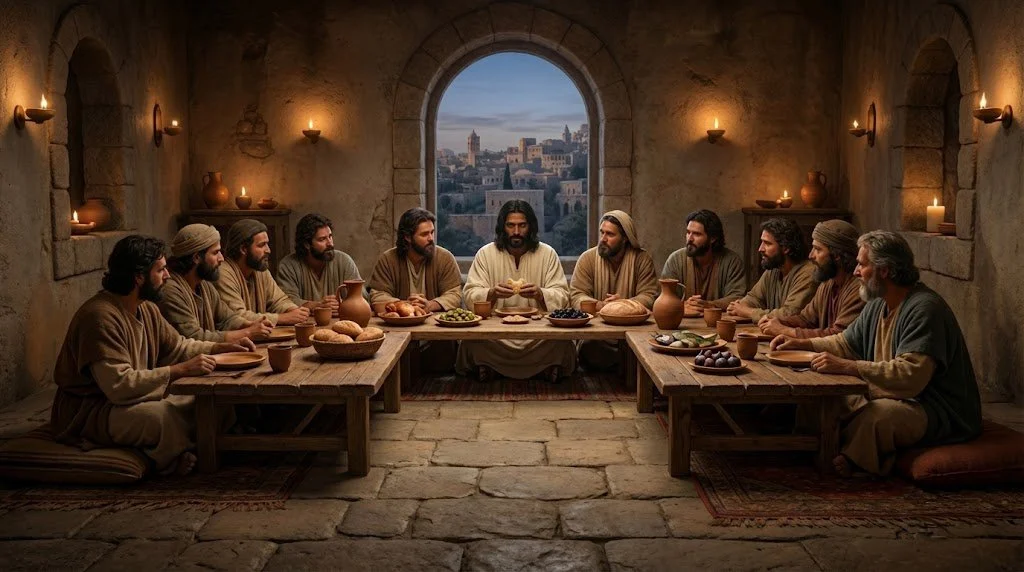
If you’ve been craving something real, you’re not crazy — you’re remembering what the ekklesia was always supposed to be.
There’s a line in the Gospels that keeps haunting me… not because it’s mysterious, but because it’s obvious.
Yeshua did not build His people around a stage.
He built them around each other.
And that’s why so much of modern church life can feel… off. Not automatically evil. Not automatically fake. But often disconnected from the pattern the New Testament assumes will exist: believers known by name, gathering close, reasoning from Scripture together, praying like family, confessing like family, carrying one another’s burdens until love becomes measurable (Acts 2:42–47; 1 Corinthians 12:12–27).
So I want to offer something simple… but not shallow.
A framework. A rhythm. A return.
Not a new brand. Not a rebellion. Not an “I’m leaving church” manifesto.
A covenant practice that can revive the ekklesia from the inside out.
It’s time to come to the table.
COME TO THE TABLE
T — Together — we invite people in, build real friendships, and gather as a covenant circle (not a crowd). (Hebrews 10:24–25; Acts 2:46)
A — Ask — we talk honestly, confess drift, encourage each other, and put real needs on the table without shame. (James 5:16; Galatians 6:2; 1 Thessalonians 5:11)
B — Break Bread — we eat together, practice fellowship, and share life until strangers become family. (Acts 2:42; Luke 24:30–31; Romans 12:13)
L — Listen — we open Scripture, reason together, pray simply, and leave with one clear obedience step. (Nehemiah 8:8; Acts 17:11; Deuteronomy 6:6–7; James 1:22)
E — Extend — we serve tangibly: we invest time, money, and help into a real person’s need this week. (James 2:15–17; 1 John 3:17–18; Acts 4:32–35)
One more thing, because this is where a lot of church people get stuck: most churches say they want “small groups,” but what they usually mean is sermon discussion groups. They hand out an outline, tell everyone to talk about Sunday’s message, fill in a few blanks, pray a quick prayer, and go home. It’s safe. It’s controlled. And it keeps the platform at the center. But it’s rarely authentic—and most churches don’t actually know what to do with authenticity anyway. Real TABLE life isn’t a worksheet. It’s not “talk about the sermon.” It’s invite people into your home, open the Scriptures, tell the truth, pray like family, and meet real needs with real love. So if you’ve been trapped in the “outline” model, hear me: you don’t need a better handout. You need a table.
And pastors—let me speak directly. If your heart is right and you’re actually shepherding, don’t be threatened by decentralized faithfulness. Don’t manage your people like a brand. Equip them. Trust them. Release them. Teach them TABLE and then tell them to build their own tables—house to house, family to family, block to block (Ephesians 4:11–16; Acts 2:46). That’s not losing control. That’s multiplying disciples. Lead with backbone: serve first, model it, and stop hiding behind safe, controlled systems. The Kingdom doesn’t need more polished outlines. It needs shepherds willing to let the body function.
Now let me walk through each letter slowly… like a Hebrew reader who knows covenant isn’t built by inspiration, but by repetition.
Because TABLE isn’t cute. TABLE is how intimacy is formed in the Kingdom.
Hebraic covenant logic vs Greek belief logic
The Bible’s worldview is deeply Hebraic. That doesn’t just mean a few Hebrew words sprinkled into sermons. It means Scripture thinks in covenant categories.
Hebraic logic asks questions like:
Who are we as a people?
What does loyalty look like?
What does obedience produce in community?
How does God’s Word become flesh in daily life? (Deuteronomy 6:6–7)
It’s not allergic to ideas, but it refuses to stop at ideas. It presses toward embodied faithfulness (Exodus 19:5–6; Deuteronomy 4:6–8; Micah 6:8).
Greek-shaped thinking, especially as it influenced the Western church, often pushes a different way:
What do I believe?
How do I define it precisely?
What category does it fit in?
Clarity matters. Truth matters. Sound teaching matters (Titus 1:9; 2 Timothy 2:15). But here’s the tension that keeps showing up:
You can have immaculate categories and still have a community that’s relationally thin and practically unloving.
Because Hebraic faith isn’t mainly proven by how cleanly you can explain it. It’s proven by whether covenant loyalty shows up in real life… especially toward the people God placed next to you (James 2:15–17; 1 John 3:17–18).
That’s why TABLE lands like a relief. It’s a return to the Bible’s native operating system: identity formed in community through practiced obedience (Romans 12:4–5; Ephesians 4:15–16).
Greek individualism vs “we-and-our-God”
Greek-shaped spirituality tends to drift private: me and my beliefs, me and my journey, me and my quiet time. Even when we gather, it can still feel like a room full of individuals having parallel experiences.
But the Scriptures assume something more demanding… and more beautiful:
we-and-our-God covenant life.
The Torah shapes a people. The prophets rebuke and restore a people. The New Covenant writings describe believers as a body—different parts, one life, shared responsibility (1 Corinthians 12; Romans 12; Ephesians 4).
So when TABLE feels “too close,” what you may be bumping into isn’t sin first. It might simply be training. Western church culture trained many of us to be well-behaved individuals. Scripture is forming us into a covenant family.
Together
Intimacy begins when distance ends.
If you stay in rows, you can stay invisible. You can worship near people and never be known. You can attend for years and still not know what someone is carrying.
That’s not a slam… it’s just what crowds do.
But Scripture doesn’t treat crowds as the primary engine of formation. It assumes people.
Hebrews says we gather to stir one another to love and good works (Hebrews 10:24–25). Acts shows believers gathering house to house (Acts 2:46). Together is where belonging becomes real.
Together looks like opening your home… or showing up in someone else’s home… or meeting somewhere human. A circle small enough that names matter and absence is noticed. Hospitality without performance (Romans 12:13; 1 Peter 4:9).
Ask
Intimacy deepens where truth is allowed.
Ask is where “community” becomes real… because people stop pretending.
James says confess to one another and pray for one another (James 5:16). Paul says bear one another’s burdens (Galatians 6:2). That’s not poetic. That’s covenant life.
Ask means dialogue and confession without spectacle. It means you can say:
“I drifted.”
“I’m numb.”
“I’m angry.”
“I’m struggling.”
“I’m lonely.”
“I don’t know what to do.”
…and you won’t be punished for being human (1 John 1:7–9; Romans 8:1).
Ask is also where encouragement becomes normal. Build each other up (1 Thessalonians 5:11). Help the weak. Be patient with them all (1 Thessalonians 5:14).
Break Bread
Intimacy grows when life is shared, not managed.
Acts 2:42 puts breaking bread right beside teaching and prayer. That’s not an accident. Meals are covenant spaces.
And Luke 24 is striking: Messiah is recognized in the breaking of bread (Luke 24:30–31). He’s often noticed in shared, ordinary life more than in polished religious moments.
Break Bread is where people relax enough to be honest later.
Eat together. Laugh together. Exhale together.
That’s not fluff. That’s formation.
Listen
Intimacy becomes sturdy when we align under the Word together.
Nehemiah 8 shows the Word read and explained so the people understand… and then respond (Nehemiah 8:8–12). Acts 17 praises the Bereans because they tested teaching by Scripture, not reputation (Acts 17:11).
Listen means we open the text, read it out loud, and reason together like family.
Not to win. Not to flex. Not to generate hot takes.
To hear God. To respond. To obey (James 1:22).
And then we pray simply, because prayer was never meant to be theater (Matthew 6:7–13). Authority stays in the Word, not in a personality (2 Timothy 3:16–17).
Extend
Intimacy becomes covenant when love turns into action.
James refuses abstract love (James 2:15–17). John refuses love that stays in words (1 John 3:17–18). Acts shows needs met so nobody is left lacking (Acts 4:32–35).
Extend means: before we leave, we decide one real act of care.
Groceries. Gas money. Childcare. A bill. A visit. A ride. A job lead. Tools and work.
Extend is how you know a table is real… because real tables leave footprints.
If TABLE feels threatening, let it mirror you
If TABLE feels threatening, it’s worth asking why.
Not to shame you. To reveal what’s been trained into us.
Sometimes TABLE threatens our privacy, our image management, our comfort, our independence, our control.
And sometimes it threatens something deeper: the quiet religious assumption that I can be okay with God without being committed to His people.
But covenant doesn’t work that way.
If you belong to Messiah, you belong to a body (1 Corinthians 12:12–27). And bodies are inconvenient. They require patience, forgiveness, and showing up (Colossians 3:12–14).
If your first reaction is, “That’s too much,” don’t condemn yourself. Just be honest.
That “too much” might be where God is inviting you into maturity.
A reminder to stay clean and covenant-minded
The goal here is not to create a new measuring stick to look down on other believers.
Be cautious.
A covenant family can exist inside a traditional church building, outside it, or across both. The point isn’t the venue. The point is the life (Romans 14:4, 10–13).
There are sincere shepherds who love people quietly. There are believers doing their best with what they’ve been taught. There are communities that look normal on Sunday but live very real covenant life the rest of the week.
So don’t discover TABLE and turn it into superiority.
That would just be the ladder in a new costume.
Stay humble. Stay invitational. Build the table. Keep it open. Let fruit speak (Matthew 7:16–20).
Quick side note from your Jewish brother
You can’t really understand the New Testament if you don’t read it as the continuation of the Hebrew Scriptures.
The apostles didn’t invent a new religion—they preached Messiah inside Israel’s covenant story (Luke 24:27; Acts 17:2–3; Acts 28:23).
So keep the whole Bible open when you do TABLE: Torah, Prophets, Writings, and the New Covenant together. That’s where the text stays honest… and that’s where we stay grounded.
The challenge
Don’t let this stay theory. Make it your week.
Pick a night and put it on your calendar.
Invite 4–10 believers. Eat something simple. Open the Scriptures (start with Acts 2:42–47 or Mark 10:42–45). Ask two questions: “What does it say?” and “What does obedience look like for us this week?” Pray in plain language. Then choose one real need and meet it before the week ends.
And next week… do it again.
That’s how the ekklesia gets rebuilt. Quietly. Locally. Faithfully.
It’s time to come to the table.
May the shalom of our Abba guard you —
shalom v’shalvah.
© bornagainzealot.com. All rights reserved.
This is original, protected work. Pastors and teachers: please do not lift or republish this content as your own. If you share or preach from it, simply credit the source and author. Integrity begins in the pulpit.
